Today was the second day of the 'Comeback' hearing for the creditor protection of Canada's three large tobacco companies (Imperial Tobacco, Rothmans, Benson and Hedges and JTI-Macdonald). From the long list of things to discuss that had been circulated ahead of the meeting, only a handful had been aired yesterday.
And with a large cast of creditors with positions to be considered, one might have thought that the day would be full with debate and legal argument. As it turned out, very little happened in open court.
The morning began with lawyers representing the dozen or so interests being ushered to meet (in private) in another court room. A half hour or so later, they emerged and spent an equivalent period caucusing (in private) in the hallways.
It was clear that an agreement was being put into action (in private). Word was out that a deal was being hammered out. Body language became more relaxed. Coats were gathered and about half of the teams began to drift away.
Around noon Justice McEwen came into court, outlined some signposts for the way forward and went through and signed (in public) the changes that each of the tobacco companies was proposing for the Order that would allow it to continue to operate under CCAA protection.
Here is what we were told:
* the items that were not discussed at this session will be picked up again at the next hearing on April 25th.
* on the week of April 15th, Justice McEwen intends to issue his ruling on the Quebec Class Action Plaintiffs' request to alter the order with respect to the companies' ability to seek leave to appeal of the Court of Appeal judgment against them or otherwise manage the impact of the CCAA order on executing that judgment.
* the CCAA orders protecting all three companies have been extended to June 28th.
* a hearing will be scheduled for the end of June (likely June 26th).
By the time the train left Toronto, the 'amended and restated' orders were on the Monitor's websites for Imperial Tobacco and JTI-Macdonald, (The one for RBH was posted somewhat later). These new orders are only modestly altered from the initial versions that were approved (in private) over the past month. Many of the adjustments are housekeeping changes or bring the orders for the three companies into alignment with each other. All now expire on the same day, for example, and they all adopt similar language with respect to the role of Mr. Winkler.
So there it seems it will sit for the next 3 weeks. The 'status quo', as defined in these orders, will continue for a while longer.
The open part of today's hearing was merely an affirmation of the deal that had been brokered in private amongst the parties. The real business was done in private. This, I expect, will be the pattern that continues -- especially when there is an officer of the court whose job it is to hold private meetings with parties and to try to strong arm them into reaching agreements.
Whatever the merits of such an approach for private business, it fits more awkwardly when more than half the parties are governments and when the policy implications are so profound. The status quo that is being maintained, after all, is the same one that is currently responsible for 45,000 annual deaths.

Showing posts with label CCAA. Show all posts
Showing posts with label CCAA. Show all posts
Friday, 5 April 2019
Thursday, 4 April 2019
CCAA-1: The Status Quo and the Quebec judgment
"I see we have a full house". Justice Thomas McEwan's comment as he sat down at the head of Courtroom 8-1 was a decided understatement. The courtroom was at twice its capacity.
A hundred or more lawyers and onlookers were assembled for the first day of the "Comeback" hearing that had been set up to hash out terms under which Canada's three large tobacco companies (Imperial Tobacco, Rothmans, Benson and Hedges and JTI-Mcdonald) could continue to be sheltered from their debts. All the seats were taken well before the scheduled beginning (10:00 am).
The crowd should have been no surprise. On the service list 35 firms are identified -- 26 law firms representing industry clients, 3 firms representing monitors, the monitors themselves, the mediator, financial advisers and restructuring specialists. Add to that interested parties that don't have official standing, and you would wonder why anyone thought they could all squeeze into this room.
The absence of overflow chairs was only one of many details that were not thought through before the day's beginning. A schedule to allow presentation and responses to the many motions that had been filed over the last week had not been agreed to by starting time. Almost an hour was taken up while lawyers met in the Judges' library to work such details out.
Nonetheless, when the hearing did start (at 11:00) things ran very smoothly - and continued to do so throughout the day. Smoothly - yes - but not without some very disturbing moments.
The unopposed items first
It took very little time to dispense with a handful of items to which there was little or no opposition: impediments to confirming settlements with between insurance companies were removed; a cash collateral issue was resolved; the role of former Justice Winkler was transformed from 'Interim Tobacco Claimant Coordinator' to 'Court-Appointed Mediator'.
The view from Quebec
The rest of the day was taken up with the only one proposal -- the request of the Quebec class action lawyers for Justice McEwen to limit the ability of the tobacco companies to simultaneously use creditor protection to negotiate a settlement while also maintaining their right to appeal a court decision.
They have offered two suggestions to the judge: a) the CCAA process would be disbanded for any defendant who makes an appeal to the Supreme Court, or b) decisions on staying the Quebec court judgment be made by the Quebec Courts, not the CCAA process.
The arguments in support of these suggestions were not made by the lawyers whose work has been described here over the past many years. The CCAA process has brought new legal talent to the teem -- Montreal specialists in insolvency law at the law firm Fishman Flanz Meland Paquin LLP.
It was Mark Meland of this firm who presented the case over the morning's hearing. In doing so, he provided colourful (and, to these ears, compelling) background to the proceedings.
Forum shopping
Mr. Meland said that the tripwire to the CCAA process was the judgment issued by the Quebec Court of Appeal in favour of Quebec smokers on March 1st - a judgment that has now been put on ice as a result of the CCAA Orders signed by 3 Ontario judges.
He framed the CCAA process (and the stay on the Quebec judgment) as an attempt of the tobacco companies to "evade improperly the jurisdiction of the Quebec Court of Appeal" . He called it a collateral attack on the jurisdiction of that court that was "unlawful, disrespectful and should not be sanctioned by this court."
He drew attention to the change in the companies strategies to prevent the judgment from coming into effect (and their having to provide more money to their victims). He told the story, not previously made public, about the events immediately after the trial.
In the hours after learning that it had lost the appeal, ITL had initiated a request to the Quebec Court of Appeal for a stay on the judgment until it had gone to the Supreme Court. A brief court hearing had taken place at the Quebec Court of Appeal on the next business day (Monday), with all parties agreeing to set March 25 as the day of hearing that motion. Mr. Meland called this a "judicial contract" and went through the exchange of emails and motions on the subject.
But instead of honouring this process, Mr. Meland pointed out, the companies had "gone down the 401" looking for a friendlier court and a friendlier statute to achieve their ends.
A creditor like no other
Mr. Meland said that the Quebec class action members deserved special consideration in the CCAA process. "They are not like every other creditor. Against all odds they achieved two remarkable judgments - there are no judgments anywhere else in the world where big tobacco has been found to be so negligent and where an award on a mass tort basis has been rendered. It is a credit to the Quebec justice system that this has been rendered."
These creditors were different also in that the CCAA was altering the status quo in their case, not protecting it. "Their definition of status quo and our definition of status quo are different ... The only party today that is affected by your order in a fundamental way is the Quebec Class Action Plaintiffs. I acknowledge there are other creditors, but there are none that are so close," said Mr. Meland.
Yes, there were other people suing the tobacco companies -- "there is not one other single pending case that will be heard in this year."
CCAA Applicants like no other
Don't interfere in Quebec Court matters
He appealed to Justice McEwen's judicial comity - citing other CCAA rulings where courts had refrained from trumping each other's decisions. "Superior courts do not order each other about or make orders interfering with each other's process. Rather, it is essential that they should cooperate. Conflicts between courts, or other bodies having ultimate judicial power, may well have serious results, including perhaps even loss of liberty. In Canada, superior courts do not compete with one another. They accord to one another "full faith and credit..."
To usurp the Quebec Court's role on a stay, Mr. Meland stressed, would be a "slap in the face" of Quebec jurisdiction.
The government of Ontario - the lone supporter
After lunch, other parties were invited to air their views on the Quebec plaintiff's request, with those in support going first. Of the almost dozen other parties, only one sided on this issue with Quebec smokers -- the government of Ontario.
On behalf of Canada's largest province (also the party with the largest claim against the tobacco companies - a gulping $330 billion!), Ms. Jacqueline Wall of the Ontario Attorney General's office said that she too felt that if the companies were able to keep their appeal options open that they would have an unfair upper hand in negotiations.
"Seeking to have the advantage of a sword of Damocles is not an expression of good faith. If the purpose is to be a global settlement - including Quebec and other applicants -- then such impediments to discussion should be removed. ...The applicants should waive their appeal rights or pursue their appeal."
After Ms. Wall's short (5 minute) intervention, support for Quebec's position seemed to evaporate. The rest of the day was spent hearing all the other parties line up against the idea.
It's all about the money
"The $1 billion – that’s what it has been all about since March 1." She said the goal of the plaintiffs was to get a final ruling in Quebec because doing so would give them an edge - "a leg up" - in any future insolvency decisions.
"All we are saying is give peace a chance"
But his next comments were even more remarkable. After a "hard fought" battle against the tobacco companies, he was ready to seek peace. "All we are saying is give peace a chance. .... In my submission there comes a time when you have to lay down your sword....Have to put aside the past. "
Next to the stand were representatives of the Monitors. Despite their independent role, all of them wholly supported the positions of the companies they were recruited by.
The billion dollar question
Justice McEwan pushed the lawyer for ITL's Monitor to explain the legal standing of the security deposit now in Quebec courts. "Who owns the money?" he asked.
He did not get a clear answer, being told instead that was "fairly technical." What was clear was that all the monitors -- including that for JTIM -- characterized any money going to Quebec smokers as a result of last month's judgment would be giving "a leg up" to one creditor over the others.
Justice McEwen asked him about fairness in the context of other class actions - would it be preferential treatment if they received money just because they were the first.
A hundred or more lawyers and onlookers were assembled for the first day of the "Comeback" hearing that had been set up to hash out terms under which Canada's three large tobacco companies (Imperial Tobacco, Rothmans, Benson and Hedges and JTI-Mcdonald) could continue to be sheltered from their debts. All the seats were taken well before the scheduled beginning (10:00 am).
The absence of overflow chairs was only one of many details that were not thought through before the day's beginning. A schedule to allow presentation and responses to the many motions that had been filed over the last week had not been agreed to by starting time. Almost an hour was taken up while lawyers met in the Judges' library to work such details out.
Nonetheless, when the hearing did start (at 11:00) things ran very smoothly - and continued to do so throughout the day. Smoothly - yes - but not without some very disturbing moments.
The unopposed items first
It took very little time to dispense with a handful of items to which there was little or no opposition: impediments to confirming settlements with between insurance companies were removed; a cash collateral issue was resolved; the role of former Justice Winkler was transformed from 'Interim Tobacco Claimant Coordinator' to 'Court-Appointed Mediator'.
The view from Quebec
The rest of the day was taken up with the only one proposal -- the request of the Quebec class action lawyers for Justice McEwen to limit the ability of the tobacco companies to simultaneously use creditor protection to negotiate a settlement while also maintaining their right to appeal a court decision.
They have offered two suggestions to the judge: a) the CCAA process would be disbanded for any defendant who makes an appeal to the Supreme Court, or b) decisions on staying the Quebec court judgment be made by the Quebec Courts, not the CCAA process.
The arguments in support of these suggestions were not made by the lawyers whose work has been described here over the past many years. The CCAA process has brought new legal talent to the teem -- Montreal specialists in insolvency law at the law firm Fishman Flanz Meland Paquin LLP.
It was Mark Meland of this firm who presented the case over the morning's hearing. In doing so, he provided colourful (and, to these ears, compelling) background to the proceedings.
Forum shopping
Mr. Meland said that the tripwire to the CCAA process was the judgment issued by the Quebec Court of Appeal in favour of Quebec smokers on March 1st - a judgment that has now been put on ice as a result of the CCAA Orders signed by 3 Ontario judges.
He framed the CCAA process (and the stay on the Quebec judgment) as an attempt of the tobacco companies to "evade improperly the jurisdiction of the Quebec Court of Appeal" . He called it a collateral attack on the jurisdiction of that court that was "unlawful, disrespectful and should not be sanctioned by this court."
In the hours after learning that it had lost the appeal, ITL had initiated a request to the Quebec Court of Appeal for a stay on the judgment until it had gone to the Supreme Court. A brief court hearing had taken place at the Quebec Court of Appeal on the next business day (Monday), with all parties agreeing to set March 25 as the day of hearing that motion. Mr. Meland called this a "judicial contract" and went through the exchange of emails and motions on the subject.
But instead of honouring this process, Mr. Meland pointed out, the companies had "gone down the 401" looking for a friendlier court and a friendlier statute to achieve their ends.
A creditor like no other
Mr. Meland said that the Quebec class action members deserved special consideration in the CCAA process. "They are not like every other creditor. Against all odds they achieved two remarkable judgments - there are no judgments anywhere else in the world where big tobacco has been found to be so negligent and where an award on a mass tort basis has been rendered. It is a credit to the Quebec justice system that this has been rendered."
These creditors were different also in that the CCAA was altering the status quo in their case, not protecting it. "Their definition of status quo and our definition of status quo are different ... The only party today that is affected by your order in a fundamental way is the Quebec Class Action Plaintiffs. I acknowledge there are other creditors, but there are none that are so close," said Mr. Meland.
Yes, there were other people suing the tobacco companies -- "there is not one other single pending case that will be heard in this year."
CCAA Applicants like no other
Mr. Meland warned the judge about the past behaviour of the tobacco companies - their persistent efforts to impede litigants and the "critical and scathing" conclusions of the Quebec court. "These are the people who are before you and who are asking for your assistance."
He gave an immediate example of their tactical ambiguity. When first appearing before justice McEwen Imperial Tobacco had said that it did not intend to seek leave to appeal -- yet had filed documents indicating they still wanted to keep this option open.
He signaled the dangers of giving the companies the capacity to cause further delays, and how a special concession which allowed them to appeal but which prevented other movements on cases would give them a new tactical weapon. They could eat up the clock in negotiations and then turn to the Supreme Court for further delays. This was too much. "Those who don't learn from history are condemned to repeat it." '"After 21 years - enough is enough"
Justice McEwen was urged to consider the impact of this on the 100,000 Quebec victims, and how his making this concession to the companies would ensure that there will not be one living member of the Quebec class to receive compensation. "When you weigh that group against the perpetrators, do you opt for the victims of the perpetrator."
He signaled the dangers of giving the companies the capacity to cause further delays, and how a special concession which allowed them to appeal but which prevented other movements on cases would give them a new tactical weapon. They could eat up the clock in negotiations and then turn to the Supreme Court for further delays. This was too much. "Those who don't learn from history are condemned to repeat it." '"After 21 years - enough is enough"
Justice McEwen was urged to consider the impact of this on the 100,000 Quebec victims, and how his making this concession to the companies would ensure that there will not be one living member of the Quebec class to receive compensation. "When you weigh that group against the perpetrators, do you opt for the victims of the perpetrator."
Don't interfere in Quebec Court matters
He appealed to Justice McEwen's judicial comity - citing other CCAA rulings where courts had refrained from trumping each other's decisions. "Superior courts do not order each other about or make orders interfering with each other's process. Rather, it is essential that they should cooperate. Conflicts between courts, or other bodies having ultimate judicial power, may well have serious results, including perhaps even loss of liberty. In Canada, superior courts do not compete with one another. They accord to one another "full faith and credit..."
To usurp the Quebec Court's role on a stay, Mr. Meland stressed, would be a "slap in the face" of Quebec jurisdiction.
The government of Ontario - the lone supporter
After lunch, other parties were invited to air their views on the Quebec plaintiff's request, with those in support going first. Of the almost dozen other parties, only one sided on this issue with Quebec smokers -- the government of Ontario.
On behalf of Canada's largest province (also the party with the largest claim against the tobacco companies - a gulping $330 billion!), Ms. Jacqueline Wall of the Ontario Attorney General's office said that she too felt that if the companies were able to keep their appeal options open that they would have an unfair upper hand in negotiations.
"Seeking to have the advantage of a sword of Damocles is not an expression of good faith. If the purpose is to be a global settlement - including Quebec and other applicants -- then such impediments to discussion should be removed. ...The applicants should waive their appeal rights or pursue their appeal."
The first to speak was Ms. Deborah Glendinning on behalf of Imperial Tobacco. She reframed the discussion away from issues of mutual respect between courts and towards an issue that seems top of mind to many -- money.
By her account, the real motivation of the Quebec lawyers was to get their hands on the security deposit that ITL and RBH had made at the order of the Court of Appeal over 2015-2017.
By her account, the real motivation of the Quebec lawyers was to get their hands on the security deposit that ITL and RBH had made at the order of the Court of Appeal over 2015-2017.
"The $1 billion – that’s what it has been all about since March 1." She said the goal of the plaintiffs was to get a final ruling in Quebec because doing so would give them an edge - "a leg up" - in any future insolvency decisions.
She gave a very different account of the hours and days after the March 1 decision. "The moment we were released from the lock up they ran to the
register asking for the money.... Our filing was not some tactical event to evade the jurisdiction of
the Quebec Court of Appeal or 'forum shopping'. In large measure ti was to prevent the Quebec
plaintiffs from getting their hands on the $1 billion."
"They forced our hand... They forced us into this position."
For those concerned that Imperial Tobacco was seeking an advantageous position, Ms. Glendinning offered that their main concern was for others. They wanted to make sure that the process was fair to the provinces and others suing them. They wanted to prevent giving a benefit to Quebec over "all the other people who
want to lay a claim to that money."
"All we are saying is give peace a chance"
As Ms. Glendinning sat down, Mr. Jeffrey Leon stood up to support her position.
In itself, this was enough to make eyebrows rise, given that he is the lawyer representing 6 provincial governments (British Columbia, Saskatchewan, Manitoba, New Brunswick, Nova Scotia and Prince Edward Island).
And as part of peace talks, he wanted to make sure that all of the money was on the table. "No one has a monopoly on the value of their claim at this
stage.... If
the process can't be divided it has to include everyone."
Mr. Max Starnino, speaking on behalf of the governments of Alberta and Newfoundland, expressed his opposition to the Quebec class action proposal. As their Factum makes clear, they are concerned that allowing the Quebec case to proceed in any way that results in a transfer of money (including through settlements of insurance companies) could harm their chances.
The others pile on
Less surprisingly, lawyers for Rothmans, Benson and Hedges and JTI-Macdonald also gave the thumbs down to the idea that Quebec courts should decide on the question of a stay of the class action.
Less surprisingly, lawyers for Rothmans, Benson and Hedges and JTI-Macdonald also gave the thumbs down to the idea that Quebec courts should decide on the question of a stay of the class action.
Paul Steep (for RBH) outlined the approach that RBH and JTIM preferred as the "narrowest and least intrusive way" forward. Their proposal maintains the right to file a request for appeal, but subjects any other steps to decisions of the CCAA court.
Robert Thornton addressed the criticisms that had been levelled about the behaviour of the companies - and especially his client, JTI-Macdonald, It was time, he suggested to turn the page. "This is a new day. A new proceeding. A New Focus." The shift from the Quebec judicial system to the CCA in Ontario reflected the need for "Fresh faces and new ideas."
He echoed the view that the $1 billion that had been required by the Quebec Court of Appeal as a security deposit should not be released to Quebec smokers. Doing so would be to allow one creditor to "tactically manoeuvre to gain an advantage over others." JTIM escaped having to contribute to the deposit, and Mr. Thornton wanted to keep it that way. "Any further deposit that is for just one stakeholder...
shouldn’t happen on your watch.."
The next voice against the proposal to return to Quebec courts any decision-making on staying their own judgment was on behalf of other class actions. There is only one other certified class action in Canada (the Knight case against Imperial Tobacco on light and mild cigarettes). But a handful of copy-cat cases have been filed in several provinces by the (dare I say notorious?) Tony Merchant law firm.
Evatt Merchant urged the judge to consider that there was no reason for Quebec smokers to be compensated ahead of other victims in Canada. They want to be included in any global settlement negotiated through former Chief Justice Warren Winkler - and to make sure that no one gets a slice of the pie before they do. "Our ultimate concern is that this shouldn't be a form of litigation – whatever track we end up going down – where smokers in Quebec who have COPD are dramatically better compensated than end user smokers in other part of the country..."
Next to the stand were representatives of the Monitors. Despite their independent role, all of them wholly supported the positions of the companies they were recruited by.
The billion dollar question
Justice McEwan pushed the lawyer for ITL's Monitor to explain the legal standing of the security deposit now in Quebec courts. "Who owns the money?" he asked.
He did not get a clear answer, being told instead that was "fairly technical." What was clear was that all the monitors -- including that for JTIM -- characterized any money going to Quebec smokers as a result of last month's judgment would be giving "a leg up" to one creditor over the others.
"That ship has sailed"
By the time Avram Fishman stood to give the response of the Quebec plaintiffs, the discussion had clearly moved from how to respect the jurisdiction of Quebec's court to what to do about the $1 billion that had been set aside by that court for the Quebec plaintiffs.
By the time Avram Fishman stood to give the response of the Quebec plaintiffs, the discussion had clearly moved from how to respect the jurisdiction of Quebec's court to what to do about the $1 billion that had been set aside by that court for the Quebec plaintiffs.
Mr. Fishman made clear that while they were very much in favour of working with Warren Winkler towards a resolution, that they did not consider that initial payment to be part of the discussion.
He derided the statements by the company lawyers that they wanted to be "fair" to all creditors, and alluded again to the tactics of attrition. He reminded the court again that JTIM had suggested that the CCAA process could take years -- and that this company had previously dragged out CCAA protection for the 6 years between 2004 and 2010. "It's a little late in the day for tobacco companies to talk about being fair as their motivation. Its not their motivation. It is to have leverage over us to try to get a better deal."
Justice McEwen asked him about fairness in the context of other class actions - would it be preferential treatment if they received money just because they were the first.
To this question, Mr. Fishman was unequivocal that the position of the Quebec plaintiffs was that this money had been set aside for Quebec victims once a final judgment was established and that this happened before the CCAA was triggered. "This is not something that would improve with the passage of
time... That ship has sailed."
Justice McEwen pressed the issue in the context of settlement discussions. Mr. Fishman made clear that they intended to apply for the money once able to do so. "We cant get at it, but that doesn’t change the legal position. The
legal position is that the money is ours. Is ours vis à vis the applicants. Its
ours vis à vis the other."
Moreover, he later pointed out, "the matter of the billion dollars is not before the court today on the comeback motion... that is for another day."
And next?
When the court adjourned shortly before 5:00 only one of several contentious issues had been discussed. But the discussion about the concerns of the Quebec plaintiffs had fleshed out a lot of positions on other issues. It drew out the extent to which 8 Canadian provinces preferred to side with tobacco companies than with a co-litigant. It exposed the vulnerability of the Quebec claim to further lengthy and costly delays.
When the court adjourned shortly before 5:00 only one of several contentious issues had been discussed. But the discussion about the concerns of the Quebec plaintiffs had fleshed out a lot of positions on other issues. It drew out the extent to which 8 Canadian provinces preferred to side with tobacco companies than with a co-litigant. It exposed the vulnerability of the Quebec claim to further lengthy and costly delays.
The Quebec claimants had made their case clearly and well, but from the room of around 100 other lawyers wanting the same money, Justice McEwen would have seen very little support for it.
Friday will begin with an informal exchange about the order of discussion.


Tuesday, 2 April 2019
Imperial Tobacco reports it has initiated discussions with provinces and class action representatives
There are now only 2 days left before the a Toronto judge again assesses whether tobacco companies can use the Companies Creditors Arrangement Act to avoid paying compensation to injured Quebec smokers.
Some of the documents filed in court last week are only now beginning to appear on the web-sites maintained by the monitors in the CCAA proceedings. The Monitor for Imperial Tobacco (FTI Consulting) seems to take longer than the others, which is why the requests that Imperial Tobacco will be making are just now being circulated.
In its Motion dated March 29 , Imperial Tobacco includes a draft order it wants the court to adopt. In addition to asking for a 10 week extension to the stay (until June 28th, 2019), it is also asking for the stay to be expanded to new categories of legal action. (see extract pasted below).
But more interesting was information filed by Eric Thauvette (Imperial Tobacco's CFO) that talks between the parties have already begun. By his account, ITL lawyer Marc Wasserman met with most of the provinces and also representatives of the Quebec class actions. The only province which did not meet with him was Quebec, which so far has been keeping a very low profile in the CCAA process. (It has not even asked to be on the 'service list' to receive updates on events).
And how did those meetings between warring parties go? According to Mr. Thauvette, they were 'frank and open'.
"The Applicants' meetings with counsel for the Tobacco Litigation plaintiffs were productive with a frank and open exchange of views, including with respect to the Initial Order and the CCAA proceedings. The Applicants agreed to consider matters raised by counsel for the Tobacco Litigation plaintiffs and to move forward on a consensual basis to the extent possible. The Applicants intend to continue this dialogue with a view to developing a framework for future discussions and, ultimately, a plan of compromise or arrangement for the benefit of all stakeholders."
Imperial Tobacco's requested change to the stay of proceedings
Some of the documents filed in court last week are only now beginning to appear on the web-sites maintained by the monitors in the CCAA proceedings. The Monitor for Imperial Tobacco (FTI Consulting) seems to take longer than the others, which is why the requests that Imperial Tobacco will be making are just now being circulated.
In its Motion dated March 29 , Imperial Tobacco includes a draft order it wants the court to adopt. In addition to asking for a 10 week extension to the stay (until June 28th, 2019), it is also asking for the stay to be expanded to new categories of legal action. (see extract pasted below).
But more interesting was information filed by Eric Thauvette (Imperial Tobacco's CFO) that talks between the parties have already begun. By his account, ITL lawyer Marc Wasserman met with most of the provinces and also representatives of the Quebec class actions. The only province which did not meet with him was Quebec, which so far has been keeping a very low profile in the CCAA process. (It has not even asked to be on the 'service list' to receive updates on events).
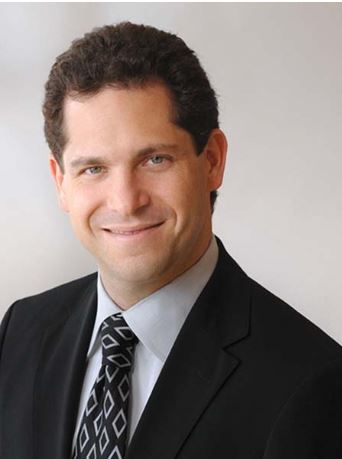 |
| Marc Wasserman, Osler |
"The Applicants' meetings with counsel for the Tobacco Litigation plaintiffs were productive with a frank and open exchange of views, including with respect to the Initial Order and the CCAA proceedings. The Applicants agreed to consider matters raised by counsel for the Tobacco Litigation plaintiffs and to move forward on a consensual basis to the extent possible. The Applicants intend to continue this dialogue with a view to developing a framework for future discussions and, ultimately, a plan of compromise or arrangement for the benefit of all stakeholders."
Imperial Tobacco's requested change to the stay of proceedings
March 12 Order
|
March 29 requested order
|
19. THIS COURT ORDERS that, during the Stay Period, no Proceeding in
Canada that relates in any way to a Tobacco Claim or to the Applicants, the
Business or the Propefty, including the Pending Litigation, shall be commenced,
continued or take place against or in respect of any member of the BAT Group
except with the written consent of the Applicants and the Monitor, or with
leave of this Court, and any and all such Proceedings currently underway or
directed to take place against or in respect of any member of the BAT Group
are hereby stayed and suspended pending further Order of this Court
|
19. THIS COURT ORDERS that, during the Stay Period, (i) none of the
Pending Litigation or any Proceeding in relation to any other Tobacco Claim
shall be commenced, continued, or take place against or in respect of any
Person named as a defendant or respondent in any of the Pending Litigation
(such Persons the “Other Defendants”); and (ii) no Proceeding in
Canada that relates in any way to a Tobacco Claim or to the Applicants,
the Business or the
Property shall be commenced, continued or take place against or in
respect of any member of the
BAT Group except, in either case, with the written consent of the
Applicants and the Monitor, or with leave of this Court, and any and all such
Proceedings currently underway or directed to take place against or in
respect of the Other Defendants or any member of the BAT Group, or affecting the
Business or the Property or the funds deposited pursuant to the Deposit
Posting Order are hereby stayed and suspended pending further Order of this
Court.
|
20. THIS COURT ORDERS that, to the extent any prescription, time or
limitation period relating to any Proceeding against or in respect of the
Applicants, the ITCAN Subsidiaries or any member of the BAT Group that is
stayed pursuant to this Order may expire, the term of such prescription, time
or limitation period shall hereby be deemed to be extended by a period equal
to the Stay Period.
|
20. THIS COURT ORDERS that, to the extent any prescription, time or
limitation period relating to any Proceeding against or in respect of the
Applicants, the ITCAN Subsidiaries, any Other Defendant or any member of the
BAT Group that is stayed pursuant to this Order may expire, the term of such
prescription, time or limitation period shall hereby be deemed to be extended
by a period equal to the Stay Period.
|
Saturday, 30 March 2019
Ontario to CCAA: Let our case proceed!
Over the last day, the web-site maintained by Deloitte in its role as Monitor for JTI-Macdonald's creditor protection and the equivalent site maintained by Ernst and Young for Rothmans Benson and Hedges have been enriched by thousands of pages of material submitted by the government of Ontario. (At the time of writing, the equivalent material was not yet posted on the websites of the Imperial Tobacco Monitor (FTI Consulting).
Almost a decade has passed since Ontario filed a claim against tobacco companies, seeking reimbursement of the health care costs that resulted from their wrongful actions. You can be forgiven for not knowing much about this suit -- other than the periodic ruling that surfaced on the CANLII database of judgments, Ontario government lawyers and leaders have kept a studiously low profile.
But within the 42-page Factum and 1168-page Motion Record filed in anticipation of next week's hearing on the Comeback Motions, a lot more about province's intentions have been revealed.
Ontario wants its case to proceed - but Quebec's case should continue to be stayed.
In its Factum, the government of Ontario asks this Ontario court to delete those parts of the orders issued in March which stall Ontario's lawsuits. It promises that doing so will not result in any transfer of money.
2. Ontario seeks Orders varying the JTIM Initial Order, the ITCAN Initial Order and the RBH Initial Order to authorize and permit Ontario to continue the Ontario HCCR Action against all fourteen of the defendants in the Ontario HCCR Action with the exception that the taking of any future proceedings to enforce any judgment and/or collect any amount owing or found to be owing by JTI-Macdonald Corp. (“JTIM”), Imperial Tobacco Canada Limited (“ITCAN”) and/or Rothmans, Benson & Hedges Inc. (“RBH”) in the Ontario HCCR Action shall be stayed pending further Order of this Honourable Court.
Like other plaintiffs, the Ontario government is calling foul about the use of the CCAA to suspend litigation.
13. Over the past decade, Ontario has invested a tremendous amount of time, money and effort to prosecute the Ontario HCCR Action in order to hold the thirteen defendant tobacco companies and the CTMC accountable for their conduct over the period from 1950 to the present. By obtaining ex parte the stays of the Ontario HCCR Action, JTIM, ITCAN and RBH have used the CCAA as a sword to cut down Ontario’s efforts and cause delay for an indefinite period of time of likely several years and cause serious prejudice to Ontario.
Tidbits
These documents shed a little light on the lawsuit...
Ontario was anticipating that its trial would start in 2020/2021
14... [the stay will undo court efforts] to move the Ontario HCCR Action forward and prepare it for the projected trial commencement date of late 2020/early 2021.
A trial of one year was foreseen
80. Ontario estimates that the trial of the Ontario HCCR Action may take approximately one year.
The role of GRE and other third parties was set to be aired
28. In May, 2011, ITCAN, Philip Morris International, Inc., Philip Morris USA Inc., Altria Group, Inc. Rothmans Inc. and RBH commenced third party claims against various corporations and individuals whom they referred to as “Aboriginal manufacturers”. These third party claims have not been discontinued; ,... During the Case Management Conference on March 8, 2019, Master Short set a timetable for the parties to deliver their motion materials in regard to GRE’s motion to strike. Also during the Case Management Conference on March 8, 2019, counsel for several other third parties advised that they are in the process of obtaining instructions regarding whether to bring a motion to strike the third party claims against them.
The court has been holding monthly meetings between litigants
42. Since January, 2018, the parties have participated in monthly Case Management Conferences conducted by Master Short on the second Friday of every month.
Eight million tobacco industry documents have been handed over to government lawyers
48. The defendants have served Ontario with productions totaling in excess of 8 million documents.
Eight expert reports have been written
On or about June 15, 2018, Ontario served on the defendants the report of five experts whom Ontario retained to provide opinion evidence to establish liability on the part of the defendant tobacco companies.
Ontario is claiming $330 billion in costs.
61. On January 31, 2019, Ontario served the expert report of Dr. Glenn Harrison (“Dr. Harrison”), an economist retained by Ontario, who has calculated the smoking attributable expenditures due to environmental tobacco smoke (second-hand smoke) in Ontario to be between $9.391 billion and $10.913 billion in present value 2016 dollars, depending on the assumed end-date for the breach exposure.
After 9 months of discussion, the disclosure of individual medical records was coming up for a hearing
69. During the Case Management Conference held on October 12, 2018, Master Short advised that he had set aside June 4, 5, 6 and 7, 2019 as tentative dates for the hearing of a 25 motion by the defendants to obtain a statistically meaningful sample. The issue of the defendants’ statistically meaningful sample motion has been discussed during the monthly Case Management Conferences held on the following dates: August 10, 2018; September 14, 2018; October 12, 2018; November 9, 2018; December 14, 2018; January 11, 2019; February 8, 2019; and March 8, 2019.
Almost a decade has passed since Ontario filed a claim against tobacco companies, seeking reimbursement of the health care costs that resulted from their wrongful actions. You can be forgiven for not knowing much about this suit -- other than the periodic ruling that surfaced on the CANLII database of judgments, Ontario government lawyers and leaders have kept a studiously low profile.
But within the 42-page Factum and 1168-page Motion Record filed in anticipation of next week's hearing on the Comeback Motions, a lot more about province's intentions have been revealed.
Ontario wants its case to proceed - but Quebec's case should continue to be stayed.
In its Factum, the government of Ontario asks this Ontario court to delete those parts of the orders issued in March which stall Ontario's lawsuits. It promises that doing so will not result in any transfer of money.
2. Ontario seeks Orders varying the JTIM Initial Order, the ITCAN Initial Order and the RBH Initial Order to authorize and permit Ontario to continue the Ontario HCCR Action against all fourteen of the defendants in the Ontario HCCR Action with the exception that the taking of any future proceedings to enforce any judgment and/or collect any amount owing or found to be owing by JTI-Macdonald Corp. (“JTIM”), Imperial Tobacco Canada Limited (“ITCAN”) and/or Rothmans, Benson & Hedges Inc. (“RBH”) in the Ontario HCCR Action shall be stayed pending further Order of this Honourable Court.
Like other plaintiffs, the Ontario government is calling foul about the use of the CCAA to suspend litigation.
13. Over the past decade, Ontario has invested a tremendous amount of time, money and effort to prosecute the Ontario HCCR Action in order to hold the thirteen defendant tobacco companies and the CTMC accountable for their conduct over the period from 1950 to the present. By obtaining ex parte the stays of the Ontario HCCR Action, JTIM, ITCAN and RBH have used the CCAA as a sword to cut down Ontario’s efforts and cause delay for an indefinite period of time of likely several years and cause serious prejudice to Ontario.
Tidbits
These documents shed a little light on the lawsuit...
Ontario was anticipating that its trial would start in 2020/2021
14... [the stay will undo court efforts] to move the Ontario HCCR Action forward and prepare it for the projected trial commencement date of late 2020/early 2021.
A trial of one year was foreseen
80. Ontario estimates that the trial of the Ontario HCCR Action may take approximately one year.
The role of GRE and other third parties was set to be aired
28. In May, 2011, ITCAN, Philip Morris International, Inc., Philip Morris USA Inc., Altria Group, Inc. Rothmans Inc. and RBH commenced third party claims against various corporations and individuals whom they referred to as “Aboriginal manufacturers”. These third party claims have not been discontinued; ,... During the Case Management Conference on March 8, 2019, Master Short set a timetable for the parties to deliver their motion materials in regard to GRE’s motion to strike. Also during the Case Management Conference on March 8, 2019, counsel for several other third parties advised that they are in the process of obtaining instructions regarding whether to bring a motion to strike the third party claims against them.
The court has been holding monthly meetings between litigants
42. Since January, 2018, the parties have participated in monthly Case Management Conferences conducted by Master Short on the second Friday of every month.
Eight million tobacco industry documents have been handed over to government lawyers
48. The defendants have served Ontario with productions totaling in excess of 8 million documents.
Eight expert reports have been written
On or about June 15, 2018, Ontario served on the defendants the report of five experts whom Ontario retained to provide opinion evidence to establish liability on the part of the defendant tobacco companies.
Ontario is claiming $330 billion in costs.
61. On January 31, 2019, Ontario served the expert report of Dr. Glenn Harrison (“Dr. Harrison”), an economist retained by Ontario, who has calculated the smoking attributable expenditures due to environmental tobacco smoke (second-hand smoke) in Ontario to be between $9.391 billion and $10.913 billion in present value 2016 dollars, depending on the assumed end-date for the breach exposure.
After 9 months of discussion, the disclosure of individual medical records was coming up for a hearing
69. During the Case Management Conference held on October 12, 2018, Master Short advised that he had set aside June 4, 5, 6 and 7, 2019 as tentative dates for the hearing of a 25 motion by the defendants to obtain a statistically meaningful sample. The issue of the defendants’ statistically meaningful sample motion has been discussed during the monthly Case Management Conferences held on the following dates: August 10, 2018; September 14, 2018; October 12, 2018; November 9, 2018; December 14, 2018; January 11, 2019; February 8, 2019; and March 8, 2019.
Friday, 29 March 2019
The Comeback Motions 1: Some initial highlights
About a week remains before the April 4 and 5th court hearing on whether tobacco companies can continue to use the Canadian Companies' Creditors Arrangement Act (CCAA) to avoid paying damages to injured Quebec smokers (or other 'creditors'). Last night court filings by those who oppose the motion began to appear on one of the Monitor's websites.
There is a lot to plough through! Here's a first course,,,,
The new documents:
1) The Quebec Class Action Plaintiffs Motions and Exhibits
2) Motions by lawyers representing 6 provinces (the Consortium).
3) Additional motions by JTI-Macdonald
The objections:
JTI-Maconald should not be able to seek leave to appeal to the Supreme Court while using CCAA.
3. The Consortium submits that to allow the Applicant to seek leave to appeal to the Supreme Court of Canada would be contrary to the stated purpose of the Applicant’s CCAA proceedings and would be an unnecessary, time consuming and costly application, at a time when all parties’ resources and focus should be on an efficient resolution of the CCAA proceedings.
Deloitte should not be appointed as a Monitor for JTI-Macdonald
15. In light of Deloitte’s and/or its affiliates’ relationship with the Applicant and its affiliates, the Consortium has serious concerns about the ability of Deloitte to fulfill the neutral and independent role required of a court-appointed monitor.
21. The involvement of various Deloitte entities in respect of the intercompany transactions between JTIM and its related parties, its representations made to the Canadian taxing authorities regarding the creditor-proofing purpose of the intercompany transactions, its professional activities on behalf of the JTI Group (including as auditor for Japan Tobacco International), its professional involvement with the other Tobacco Companies, and its general activities on behalf of the tobacco industry (all as detailed in the Johnston JTIM Affidavit), as well as the failure of Deloitte to fully disclose same in its pre-filing report, creates an appearance of conflict that can only be resolved by the replacement of Deloitte as monitor.
Reducing the payments that JTI-M can make while under CCAA.
Lawyers for Quebec smokers have identified a number of expenses that JTIM is permitted to make.
Top of the list are the loan payments and royalty fees to its related companies as a result of "the tangled web of JTIM's intercompany contracts." They are askign that all of the net cash generated by JTIM during the CCAA process be kept within the company in Canada.
On the strength of these contractual schemes, the JTI Group has been draining the profits out of JTIM year after year. Those contracts include the debentures and trademark agreements pursuant to which JTIM proposes to continue to make payments to its related entity during the pendency of the CCAA Proceeding.
Other payments they want removed from the protected budget of the CCAA include any fees for a restructuring consultant. They say that this is redundant, given the role of Warren Winkler in the related ITL case.
Disentangling the three stays
The decision of Justice Hainey to prevent the plaintiffs in the Quebec class action from putting the Court of Appeal judgment into effect with respect to all three companies raised a lot of eyebrows. In their motion, lawyers for the injured smokers who might have hoped that a claim process would soon be in place lay out the reasons that the court should back down from this approach.
The CCAA stay of proceedings sought by JTIM, with a view to staying proceedings before the Quebec CA involving only Imperial and RBH, was a collateral attack on the judicial process of the Quebec CA for an improper purpose, to assist Imperial and RBH which had not yet filed for CCAA protection.
JTIM has manifestly not met the test for extending the stay of proceedings to third parties, let alone unrelated third parties. Furthermore, the stay of proceedings in favour of Imperial and RBH is unnecessary now that each of them has obtained an Initial Order.
The Request for MORE TIME!
In JTIM's motion it is asking for a 3 month extention -- and has signalled that the other companies are doing likewise.
There is a lot to plough through! Here's a first course,,,,
The new documents:
1) The Quebec Class Action Plaintiffs Motions and Exhibits
2) Motions by lawyers representing 6 provinces (the Consortium).
3) Additional motions by JTI-Macdonald
The objections:
JTI-Maconald should not be able to seek leave to appeal to the Supreme Court while using CCAA.
3. The Consortium submits that to allow the Applicant to seek leave to appeal to the Supreme Court of Canada would be contrary to the stated purpose of the Applicant’s CCAA proceedings and would be an unnecessary, time consuming and costly application, at a time when all parties’ resources and focus should be on an efficient resolution of the CCAA proceedings.
Deloitte should not be appointed as a Monitor for JTI-Macdonald
15. In light of Deloitte’s and/or its affiliates’ relationship with the Applicant and its affiliates, the Consortium has serious concerns about the ability of Deloitte to fulfill the neutral and independent role required of a court-appointed monitor.
21. The involvement of various Deloitte entities in respect of the intercompany transactions between JTIM and its related parties, its representations made to the Canadian taxing authorities regarding the creditor-proofing purpose of the intercompany transactions, its professional activities on behalf of the JTI Group (including as auditor for Japan Tobacco International), its professional involvement with the other Tobacco Companies, and its general activities on behalf of the tobacco industry (all as detailed in the Johnston JTIM Affidavit), as well as the failure of Deloitte to fully disclose same in its pre-filing report, creates an appearance of conflict that can only be resolved by the replacement of Deloitte as monitor.
Reducing the payments that JTI-M can make while under CCAA.
Lawyers for Quebec smokers have identified a number of expenses that JTIM is permitted to make.
Top of the list are the loan payments and royalty fees to its related companies as a result of "the tangled web of JTIM's intercompany contracts." They are askign that all of the net cash generated by JTIM during the CCAA process be kept within the company in Canada.
On the strength of these contractual schemes, the JTI Group has been draining the profits out of JTIM year after year. Those contracts include the debentures and trademark agreements pursuant to which JTIM proposes to continue to make payments to its related entity during the pendency of the CCAA Proceeding.
Other payments they want removed from the protected budget of the CCAA include any fees for a restructuring consultant. They say that this is redundant, given the role of Warren Winkler in the related ITL case.
Disentangling the three stays
The decision of Justice Hainey to prevent the plaintiffs in the Quebec class action from putting the Court of Appeal judgment into effect with respect to all three companies raised a lot of eyebrows. In their motion, lawyers for the injured smokers who might have hoped that a claim process would soon be in place lay out the reasons that the court should back down from this approach.
The CCAA stay of proceedings sought by JTIM, with a view to staying proceedings before the Quebec CA involving only Imperial and RBH, was a collateral attack on the judicial process of the Quebec CA for an improper purpose, to assist Imperial and RBH which had not yet filed for CCAA protection.
JTIM has manifestly not met the test for extending the stay of proceedings to third parties, let alone unrelated third parties. Furthermore, the stay of proceedings in favour of Imperial and RBH is unnecessary now that each of them has obtained an Initial Order.
The Request for MORE TIME!
In JTIM's motion it is asking for a 3 month extention -- and has signalled that the other companies are doing likewise.
Saturday, 23 March 2019
Another one bites the bullet - RBH files for creditor protection
There are many times in my life when news that all of Canada's large tobacco companies had been forced into creditor protection would have felt like BIG NEWS.
But when Rothmans, Benson & Hedges sent the news around yesterday evening that it too had a court order suspending all legal action against it so that it could "carry on its business in the ordinary course", the moment felt far more bland.Formerly unimaginable events are now occurring weekly.
The order protecting RBH was issued yesterday by Justice Patillo of the Ontario Superior Court. The substance of the Order was roughly similar to those issued by his colleagues over the past couple of weeks. As with the others, there is a comprehensive stay of all legal proceedings other than the rights of the companies to ask the Supreme Court to agree to review the decision of the Quebec Court of Appeal which landed on them 3 weeks ago.
With this latest move, the companies are united in sending to governments and other claimants a clear message: "Let's talk".
As Justice Patillo put it yesterday "RBH requires CCAA relieve to enable it to pursue a CCAA plan of arrangement while continuing to operate its business and keep creditors and contingent creditors on an equal footing to allow it to deal fairly with the claims against it, with a view to a global settlement."

Whether negotiations have begun is not known. In the Order issued by Justice McEwan last week, former judge Warren Winkler was given a $1 million budget to act as a "Interim Tobacco Claimant Coordinator". Presumably he is already at work if he wants to have something to report when the whole issue is considered again (the 'comeback motions') on April 4 and 5th. That hearing will now involve all three companies.
But when Rothmans, Benson & Hedges sent the news around yesterday evening that it too had a court order suspending all legal action against it so that it could "carry on its business in the ordinary course", the moment felt far more bland.Formerly unimaginable events are now occurring weekly.
The order protecting RBH was issued yesterday by Justice Patillo of the Ontario Superior Court. The substance of the Order was roughly similar to those issued by his colleagues over the past couple of weeks. As with the others, there is a comprehensive stay of all legal proceedings other than the rights of the companies to ask the Supreme Court to agree to review the decision of the Quebec Court of Appeal which landed on them 3 weeks ago.
With this latest move, the companies are united in sending to governments and other claimants a clear message: "Let's talk".
As Justice Patillo put it yesterday "RBH requires CCAA relieve to enable it to pursue a CCAA plan of arrangement while continuing to operate its business and keep creditors and contingent creditors on an equal footing to allow it to deal fairly with the claims against it, with a view to a global settlement."

Whether negotiations have begun is not known. In the Order issued by Justice McEwan last week, former judge Warren Winkler was given a $1 million budget to act as a "Interim Tobacco Claimant Coordinator". Presumably he is already at work if he wants to have something to report when the whole issue is considered again (the 'comeback motions') on April 4 and 5th. That hearing will now involve all three companies.
Tuesday, 19 March 2019
A modest course correction on JTI-Macdonald's creditor protection
Another day and yet another court order related to Canada's tobacco companies' attempts to avoid having to pay compensation to injured Quebec smokers.
Recap: After Quebec Court of Appeal judgment, tobacco defendants run to Ontario for bankruptcy cover
 In doing so, he nodded to the views of Quebec courts that JTI-Macdonald was up to no good when it created a paper debt to itself. Today, Justice McEwan wrote: "The comments of Justice Riordan and Justice Schrager raise clear concerns about the legitimacy of the inter-company contracts."
Justice Riordan's take on the ploy was described in his final ruling on the case:
As part of its request for protection, JTI was obliged to provide a forecast of its earnings over the next several weeks. Among them was a scheduled shipment of $7.648 million. Today's order will prevent that from happening -- although whether that money will ever be received by members of the Quebec class action is still not made certain!
Recap: After Quebec Court of Appeal judgment, tobacco defendants run to Ontario for bankruptcy cover
- On March 1st, the Quebec Court of Appeal upheld Justice Riordan's multi-billion dollar ruling against the Big Three tobacco companies.
- A week later, on March 8th, JTI-Macdonald successfully asked for creditor protection under provisions of the federal Companies' Creditors Arrangement Act. Among the conditions granted to them by Justice Hainey was the right to keep shipping payments to other companies in the JTI family with whom they had debts.
- Before you could bat an eye, on March 12, Imperial Tobacco was also granted protection, and was able to get Justice McEwan to appoint a former judge to 'coordinate' all claims against the company.
- On the same day (March 12), Justice Hainey made public his reasons for acceding to the requests of the companies.
- Two days later (March 15), Justice McEwan did likewise with respect to Imperial Tobacco.
This week: Ontario courts revisit the JTI bankruptcy order, and annul one section favourable to JTI.
While we ordinary folk were still wading through the voluminous background material on the monitor's web-sites (FTI Consulting for Imperial Tobacco and Deloitte for JTI-Macdonald), lawyers representing the Quebec class actions were preparing their own request, which they filed with the court last Friday.
Their request? An order that prohibited any payment of principal interest and royalties from JTI- Macdonald to its related companies. Today, Justice McEwan issued a 9-page hand-written "yes".

Justice Riordan's take on the ploy was described in his final ruling on the case:
[1101] In the first, we cannot but conclude that this whole tangled web of interconnecting contracts is principally a creditor-proofing exercise undertaken after the institution of the present actions by a sophisticated parent company, Japan Tobacco Inc., operating in an industry that was deeply embroiled in product liability litigation. Even Mr. Poirier could not deny that. And on paper, the sham may well succeed.
[1102] Unless the Interco Contracts are overturned, something that is not the subject of the present files, JTM appears to be nothing more than a break-even operation. So be it, but that is an artificial state of affairs that does not reflect the company's true patrimonial situation. Absent these artifices, JTM is earning an average of $103,000,000 a year before taxes and that is the patrimonial situation that we will adopt for the purpose of assessing punitive damages.
[1103] Then there is the qualitative side. The Interco Contracts represent a cynical, bad-faith effort by JTM to avoid paying proper compensation to its customers whose health and well-being were ruined, and the word is not too strong, by its wilful conduct.In the nick of time
This deserves to be sanctioned and we shall do so by setting the condemnation for punitive damages above the base amount
As part of its request for protection, JTI was obliged to provide a forecast of its earnings over the next several weeks. Among them was a scheduled shipment of $7.648 million. Today's order will prevent that from happening -- although whether that money will ever be received by members of the Quebec class action is still not made certain!
Saturday, 16 March 2019
Justice Hainey gives his reasons for siding with JTI-Macdonald.
In the middle of the week, Justice Glenn Hainey of the Ontario Superior Court issued his reasons for granting JTI creditor protection in a way that sideswiped ability of some Quebec injured smokers to claim compensation.
His ruling is now downloadable (2019 ONSC 1625). In case the spring thaw was beginning to make you feel better, reading his explanation will quickly restore your winter depression.
Justice Hainey seems to feel his job is to ensure that lawsuits against tobacco companies don't put them out of business.
"Is it appropriate to grant the requested stay of proceedings?" he asks and then replies in the affirmative based on the importance he sees in the court protecting the economic interests of the company.
Carved out of his general stay is the right of JTI-Macdonald to appeal the Appeal Court ruling to the Supreme Court. He gives no rationale for this decision - other than it being asked and considered by him to be "reasonable to permit" it happening.
Those who disagree will likely be in his court at 10 a.m. on April 4th when the "comeback motion" will be heard.

April 4th will be a busy day
It would appear that both the Imperial Tobacco and JTI Macdonald comeback motions will be heard on April 4th. Not clear yet how this will be managed -- but the ITL date is clearly laid out in the notice to creditors that appeared in the Globe and Mail (and La Presse) this morning.
His ruling is now downloadable (2019 ONSC 1625). In case the spring thaw was beginning to make you feel better, reading his explanation will quickly restore your winter depression.
Justice Hainey seems to feel his job is to ensure that lawsuits against tobacco companies don't put them out of business.
[3] As a result of a judgment of the Quebec Court of Appeal released on March 1, 2019 in a class proceeding (“Quebec Class Action”), JTIM and two other defendants are liable for damages totaling $13.5 billion (“Quebec Judgment”). If this judgment is not stayed, its enforcement could destroy the company because JTIM does not have sufficient funds to satisfy the judgment. [emphasis added]To be precise, he identifies concerns about the impact of "enforcement of the Quebec Judgment" on employees, suppliers, retailers and taxes. His expressed concerns for the 790,000 customers of JTIM does not extend to those whose claims against the company have been tried and proven.
"Is it appropriate to grant the requested stay of proceedings?" he asks and then replies in the affirmative based on the importance he sees in the court protecting the economic interests of the company.
[13] JTIM cannot pay the amount of the Quebec Judgment. Any steps to enforce the judgment could cause serious harm to JTIM’s business to the detriment of all of its stakeholders. In my view, it is appropriate for this reason to grant the requested stay of proceedings in favour of JTIM.And why did he extend his generosity to the other two companies? Because it was "just and reasonable" to do so, and that "the balance of convenience" the protection of the companies. Not once does he acknowledge the impact of his actions on Quebec class action members, or even how they might factor into his "balance of convenience."
Carved out of his general stay is the right of JTI-Macdonald to appeal the Appeal Court ruling to the Supreme Court. He gives no rationale for this decision - other than it being asked and considered by him to be "reasonable to permit" it happening.
Those who disagree will likely be in his court at 10 a.m. on April 4th when the "comeback motion" will be heard.

April 4th will be a busy day
It would appear that both the Imperial Tobacco and JTI Macdonald comeback motions will be heard on April 4th. Not clear yet how this will be managed -- but the ITL date is clearly laid out in the notice to creditors that appeared in the Globe and Mail (and La Presse) this morning.
Wednesday, 13 March 2019
Imperial Tobacco gets Ontario Court to give it creditor protection, freeze the security deposit and set up an arbitration body
Yesterday evening, while the rest of us were busy with dinner, Imperial Tobacco Canada Ltd let it be known that earlier in the day it had received creditor protection from the Ontario Superior Court (Justice McEwen). Within a few hours, the background documents had been posted by the monitor.
And more! The stewardship of tobacco litigation seems to be assumed by a new officer of this Ontario Court.
Former judge (Warren Winkler) is made an officer of the Court "to assist and to coordinate the interests of all persons... in connection with the pending litigation" and to set up a "Tobacco Claimant Committee". A $1 million budget is set up for this purpose.
(You might remember the name -- Justice Winkler was the one who denied the Caputo class action. Intriguingly, one of the tobacco industry defendant lawyers in that case, Glenn Hainey, is the judge who only last week issued the first stay on the Quebec ruling).
The function of the Committee that Mr. Winkler will sets up is, as explained elsewhere in their application to "represent the interests of all Tobacco Claimants in negotiating a settlement with the Applicants and others."
All that in one afternoon! Things move faster in Toronto.
Lo and behold! Like the order issued earlier this week by Justice Hainey, this one puts the brakes on all the lawsuits currently facing the company.
But there's a couple of added wrinkles! This stay order also freezes the money that the Quebec Court of Appeal had required the companies to deposit.
But there's a couple of added wrinkles! This stay order also freezes the money that the Quebec Court of Appeal had required the companies to deposit.
THIS COURT ORDERS that during the Stay Period, all rights and remedies of any individual, firm, corporation, governmental body or agency, or any other entities (all of the foregoing, collectively being "Persons" and each being a "Person") against or in respect of the Applicants, the ITCAN Subsidiaries or the Monitor or their respective employees and representatives acting in that capacity, or affecting the Business or the Property or to obtain the funds deposited pursuant to the Deposit Posting Order (including, for greater certainty, any enforcement process or steps or other rights and remedies under or relating to the Quebec Class Actions against the Applicants, the Property or the ITCAN Subsidiaries), are hereby stayed.(You will remember that Imperial Tobacco had been required in 2015 by the Quebec Court of Appeal to post $785 million. Following the court's affirmation of the award for Quebec class action members, this money was expected to be handed over so that some victims could begin receiving payments).
And more! The stewardship of tobacco litigation seems to be assumed by a new officer of this Ontario Court.
Former judge (Warren Winkler) is made an officer of the Court "to assist and to coordinate the interests of all persons... in connection with the pending litigation" and to set up a "Tobacco Claimant Committee". A $1 million budget is set up for this purpose.
(You might remember the name -- Justice Winkler was the one who denied the Caputo class action. Intriguingly, one of the tobacco industry defendant lawyers in that case, Glenn Hainey, is the judge who only last week issued the first stay on the Quebec ruling).
 |
| Caputo vs. Imperial Tobacco Ltd., 1997 CanLII 12162 (ON SC) |
The function of the Committee that Mr. Winkler will sets up is, as explained elsewhere in their application to "represent the interests of all Tobacco Claimants in negotiating a settlement with the Applicants and others."
All that in one afternoon! Things move faster in Toronto.
Saturday, 9 March 2019
Turns out it only takes one Ontario judge to stall six Quebec ones.
As reported here and in the mainstream media yesterday, JTI-Macdonald had asked for (and received) court protection under the Canada's bankruptcy laws (the Companies' Creditors Arrangement Act). Wanting to know more, I asked for (and received) copies of the court documents involved. They make for very disturbing reading.
It would appear that JTIM was able to ask for (and receive) the complicity of an Ontario lower court judge in suspending action on the Quebec tobacco trials.
Not just creditor protection for JTIM- but a stay of proceedings that favours all three companies
The kicker paragraphs of the 30-page "Initial Order" issued by Justice Glenn Hainey of the Ontario Superior Court begin about a third of the way in. After laying out the right of JTI to continue to do business as usual (and to continue to ship its profits to its off-shore owner), the Ontario judge sets a one month period when the rulings of the Quebec Court are effectively null and void.
Same ruse, different court
The rationale that JTIM provided to Justice Hainey for bankruptcy protection is exactly the same as Justice Riordan's rationale for slapping them with extra punitive damages: - the corporate restructuring that turned them from a profitable to a heavily indebted cigarette company.
The details are laid out in its 132-page application record and 34 page Factum but boil down to a massive phony paper debt owed by JTIM to its owners in return for being able to use its unique Canadian trademarks like Export A. As a result, instead of sending post-tax earnings to its Tokyo-based owners, it sends income tax-free loan payments. Importantly in this context, the Tokyo company is a priority creditor who stands in line ahead of anyone else with a financial claim.
This ploy has been hashed out multiple times in Quebec Courts - before Justice Mongeon in 2013, before Justice Riordan in 2014, and as part of JTI's arguments during the appeal hearing in 2016. The corporate restructuring (I once heard it referred to as a fraudulent conveyance) is so transparently offensive that it became the basis of additional punitive damages in Riordan's ruling (paras 1092 to 1104).
A surprise Friday afternoon hearing in a different city
JTIM seeing bankruptcy cover is no surprise, but this particular Ontario development opens up a new bag of dirty tricks. No notice was given to the other parties and they had no ability to make representation.
In its application, JTIM acknowledged that it had been asked to provide advance notice of any bankruptcy applications. It notes that the Quebec class action lawyers asked in 2015 for 7 days prior notice, and that last week, counsel to most provinces had similarly done so. In all cases, the company reports, "JTIM did not reply to the request".
It did not admit that this was because it didn't want them in the room. The reason provided was that the private late-afternoon meeting was required to protect the share value and avoid speculative stock-trading.
Rubber stamp? Surely not!
At first glance, the order issued by Justice Hainey is word-for-word the text drafted by JTIM and included in their application. Conveniently, they also include the 'track version' copy of their additions to the boilerplate application. This makes it clear where they were asking for consideration (like stay of execution) that goes beyond the normal bankruptcy request.
Justice Hainey seems to have nodded along to the whole thing. I know they do things differently in Toronto, but this seems so extremely one-sided.
Next Steps
The order suggests that the next step in this court is a hearing on April 4th.
Questions
It would appear that JTIM was able to ask for (and receive) the complicity of an Ontario lower court judge in suspending action on the Quebec tobacco trials.
Not just creditor protection for JTIM- but a stay of proceedings that favours all three companies
The kicker paragraphs of the 30-page "Initial Order" issued by Justice Glenn Hainey of the Ontario Superior Court begin about a third of the way in. After laying out the right of JTI to continue to do business as usual (and to continue to ship its profits to its off-shore owner), the Ontario judge sets a one month period when the rulings of the Quebec Court are effectively null and void.
"19. This court orders that during the Stay Period [until April 5, 2019 or later] none of the Pending Litigation or any Proceeding in relation thereto shall be commenced, continued or take place against or in respect of any Person named as a defendant or respondent in any of the Pending Litigation ... and any all all such Proceedings currently underway or directed to take place against or in respect of any of the Other Defendants or any member of the JTI Group or affecting the Business or Property are hereby stayed and suspended pending further Order of this Court."To add insult to injury, the order makes clear that governments will continue to get taxes, landlords will continue to get rent, corporate directors will get an extra $4 million and the bankruptcy managers will get $3 million -- but that Quebec smokers will be SOL.
Same ruse, different court
The rationale that JTIM provided to Justice Hainey for bankruptcy protection is exactly the same as Justice Riordan's rationale for slapping them with extra punitive damages: - the corporate restructuring that turned them from a profitable to a heavily indebted cigarette company.
The details are laid out in its 132-page application record and 34 page Factum but boil down to a massive phony paper debt owed by JTIM to its owners in return for being able to use its unique Canadian trademarks like Export A. As a result, instead of sending post-tax earnings to its Tokyo-based owners, it sends income tax-free loan payments. Importantly in this context, the Tokyo company is a priority creditor who stands in line ahead of anyone else with a financial claim.
This ploy has been hashed out multiple times in Quebec Courts - before Justice Mongeon in 2013, before Justice Riordan in 2014, and as part of JTI's arguments during the appeal hearing in 2016. The corporate restructuring (I once heard it referred to as a fraudulent conveyance) is so transparently offensive that it became the basis of additional punitive damages in Riordan's ruling (paras 1092 to 1104).
"The Interco Contracts represent a cynical, bad-faith effort by JTM to avoid paying proper compensation to its customers whose health and well-being were ruined, and the word is not too strong, by its wilful conduct."JTI asked the Appeal Court to take back those harsh words, but the court found no reason to. In last week's ruling (paras 1158-1163], it said instead that after opening up the sealed financial records, it found it agreed with Riordan's condemnation of this restructuring as as creditor proofing.
A surprise Friday afternoon hearing in a different city
JTIM seeing bankruptcy cover is no surprise, but this particular Ontario development opens up a new bag of dirty tricks. No notice was given to the other parties and they had no ability to make representation.
In its application, JTIM acknowledged that it had been asked to provide advance notice of any bankruptcy applications. It notes that the Quebec class action lawyers asked in 2015 for 7 days prior notice, and that last week, counsel to most provinces had similarly done so. In all cases, the company reports, "JTIM did not reply to the request".
It did not admit that this was because it didn't want them in the room. The reason provided was that the private late-afternoon meeting was required to protect the share value and avoid speculative stock-trading.
Rubber stamp? Surely not!
At first glance, the order issued by Justice Hainey is word-for-word the text drafted by JTIM and included in their application. Conveniently, they also include the 'track version' copy of their additions to the boilerplate application. This makes it clear where they were asking for consideration (like stay of execution) that goes beyond the normal bankruptcy request.
Justice Hainey seems to have nodded along to the whole thing. I know they do things differently in Toronto, but this seems so extremely one-sided.
Next Steps
The order suggests that the next step in this court is a hearing on April 4th.
- How can it be that a solitary Ontario judge can wade in late one Friday afternoon - without any notice or participation of affected parties -- and stay a Quebec appeal court ruling.?
- Is Justice Glenn Hainey bilingual enough to have read the Appeal Court ruling? If not, why would he have ruled without doing so? If so, why would he have ruled the way he did?
- If Justice Hainey can suspend a Quebec court ruling, can a Quebec court suspend his?
Friday, 8 March 2019
Ontario court gives JTI-Macdonald quickie creditor protection
Almost a week to the hour after the Quebec Court of Appeal delivered its unequivocal support for Quebec smokers in their decades' long struggle for compensation from tobacco companies, the strategy of one of the defendant tobacco companies to avoid paying up became public.
At the end of the business day, JTI-Macdonald issued a press release revealing that an Ontario court had granted them bankruptcy protection -- a move they said was prompted by the court decision and which they found necessary "to protect 500 Canadian jobs and carry on its business operations with minimal disruption."

Why now? Why only one company?
In upholding Justice Riordan's May 27, 2015 decision, the Quebec Court of Appeal returned events more or less back to where things left off in late 2015:
a) the companies are required to immediately deposit a combined initial payment of $1.13109 billion, of which JTI's share was $142.5 million.
b) 'provisional execution notwithstanding appeal' comes into play, meaning that compensation payments using this money can begin flowing to class members even before the appeals are finalized, and some of the plaintiff's legal costs can be covered.
c) additional payments to victims that need funds beyond the initial $1.13109 billion will require further direction from the court.
More or less, that is where we have returned.
In the first weeks after the ruling was issued, following moves and counter moves by the parties, the Appeal Court suspended provisional execution, and replaced it with a security deposit of the same amount. For Imperial Tobacco and Rothmans, Benson and Hedges, the right hand of the court relieved them of a $758 million and $226 million payment only to have the left hand take it back shortly later.
So for those two companies, step "a" has already been completed. The money is now long ago deposited into a trust account where we can presume it has been gathering interest.
Despite brave talk to the media last week about plans to file an appeal, both companies conceded to shareholders this week that the money was gone.
* As BAT put it: "Following the 1 March 2019 judgment, the Board of Directors of ITCAN have reassessed the recoverability of the deposit and have determined that the asset's recoverability is, under IFRS, less than virtually certain."
* Philip Morris International noted that its decision to note a CDN $226 million 'adjusting expense' was based on its "assessment of the portion of the judgment that it believes is probable and estimable at this time."
For JTI-Macdonald, the circumstances are different.
For reasons that may perhaps never be fully explained, this smallest defendant escaped from the decision to require a security deposit. (A scheduling conflict was the excuse given at the time of the hearing). As a result, the requirement that it pony up its $137.5 million share of the initial deposit only came into force with last week's ruling.
This makes JTI the only company in a position where it can hope that possession is nine-tenths of the law -- and that it can hold on to its money using whatever tools are available.
Remember, this is a company that has mastered the shell game. It used bankruptcy proceedings in 2004 to avoid paying taxes to the Quebec government. It turned its org chart into a spaghetti code of IOUs from the Canadian branch to its Japan-based owners, so that it could avoid declaring any profits in Canada.
These restructuring efforts earned the company more than rebuke during the class action process - their efforts to become "creditor proof" landed them with additional punitive damages. As Justice Riordan put it:
"... we cannot but conclude that this whole tangled web of interconnecting contracts is principally a creditor-proofing exercise undertaken after the institution of the present actions by a sophisticated parent company, Japan Tobacco Inc.,operating in an industry that was deeply embroiled in product liability litigation. ...
The Interco Contracts represent a cynical, bad-faith effort by JTM to avoid paying proper compensation to its customers whose health and well-being were ruined, and the word is not too strong, by its wilful conduct. This deserves to be sanctioned and we shall do so by setting the condemnation for punitive damages above the base amount."
The first, but not the last?
RBH and ITL may also have plans to avoid paying anything beyond the initial deposit - including, perhaps, bankruptcy protection. Stay tuned!
Justice vs. Jobs
For the past month, Canadians have been gripped with the dramatic struggle between law-makers and law-keepers over the hierarchy between jobs and justice. Now JTI-Macdonald is playing the jobs card in an Ontario court in any attempt to stymie justice in Quebec. Is this something they teach in law school?
At the end of the business day, JTI-Macdonald issued a press release revealing that an Ontario court had granted them bankruptcy protection -- a move they said was prompted by the court decision and which they found necessary "to protect 500 Canadian jobs and carry on its business operations with minimal disruption."
Why now? Why only one company?
In upholding Justice Riordan's May 27, 2015 decision, the Quebec Court of Appeal returned events more or less back to where things left off in late 2015:
a) the companies are required to immediately deposit a combined initial payment of $1.13109 billion, of which JTI's share was $142.5 million.
b) 'provisional execution notwithstanding appeal' comes into play, meaning that compensation payments using this money can begin flowing to class members even before the appeals are finalized, and some of the plaintiff's legal costs can be covered.
c) additional payments to victims that need funds beyond the initial $1.13109 billion will require further direction from the court.
More or less, that is where we have returned.
In the first weeks after the ruling was issued, following moves and counter moves by the parties, the Appeal Court suspended provisional execution, and replaced it with a security deposit of the same amount. For Imperial Tobacco and Rothmans, Benson and Hedges, the right hand of the court relieved them of a $758 million and $226 million payment only to have the left hand take it back shortly later.
So for those two companies, step "a" has already been completed. The money is now long ago deposited into a trust account where we can presume it has been gathering interest.
Despite brave talk to the media last week about plans to file an appeal, both companies conceded to shareholders this week that the money was gone.
* As BAT put it: "Following the 1 March 2019 judgment, the Board of Directors of ITCAN have reassessed the recoverability of the deposit and have determined that the asset's recoverability is, under IFRS, less than virtually certain."
* Philip Morris International noted that its decision to note a CDN $226 million 'adjusting expense' was based on its "assessment of the portion of the judgment that it believes is probable and estimable at this time."
For JTI-Macdonald, the circumstances are different.
For reasons that may perhaps never be fully explained, this smallest defendant escaped from the decision to require a security deposit. (A scheduling conflict was the excuse given at the time of the hearing). As a result, the requirement that it pony up its $137.5 million share of the initial deposit only came into force with last week's ruling.
This makes JTI the only company in a position where it can hope that possession is nine-tenths of the law -- and that it can hold on to its money using whatever tools are available.
Remember, this is a company that has mastered the shell game. It used bankruptcy proceedings in 2004 to avoid paying taxes to the Quebec government. It turned its org chart into a spaghetti code of IOUs from the Canadian branch to its Japan-based owners, so that it could avoid declaring any profits in Canada.
These restructuring efforts earned the company more than rebuke during the class action process - their efforts to become "creditor proof" landed them with additional punitive damages. As Justice Riordan put it:
"... we cannot but conclude that this whole tangled web of interconnecting contracts is principally a creditor-proofing exercise undertaken after the institution of the present actions by a sophisticated parent company, Japan Tobacco Inc.,operating in an industry that was deeply embroiled in product liability litigation. ...
The Interco Contracts represent a cynical, bad-faith effort by JTM to avoid paying proper compensation to its customers whose health and well-being were ruined, and the word is not too strong, by its wilful conduct. This deserves to be sanctioned and we shall do so by setting the condemnation for punitive damages above the base amount."
The first, but not the last?
RBH and ITL may also have plans to avoid paying anything beyond the initial deposit - including, perhaps, bankruptcy protection. Stay tuned!
Justice vs. Jobs
For the past month, Canadians have been gripped with the dramatic struggle between law-makers and law-keepers over the hierarchy between jobs and justice. Now JTI-Macdonald is playing the jobs card in an Ontario court in any attempt to stymie justice in Quebec. Is this something they teach in law school?
Subscribe to:
Posts (Atom)